
Vampirio: Defend & Survive
Outfit7 Neo LimitedAction
4.5125.00 Reviews
- Version
- 1.5.10.25847
- Installs
- 100.00K
- Age Rating
- Everyone
Screenshots
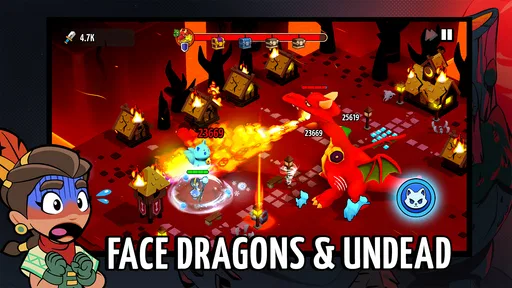
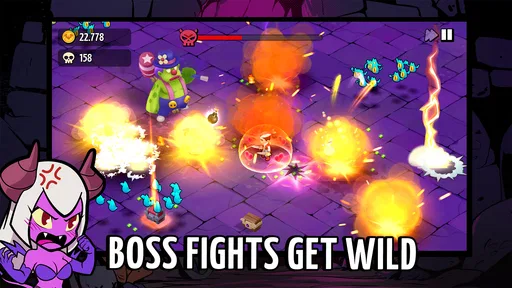

Our Review of Vampirio: Defend & Survive
 Analysis by Appyee
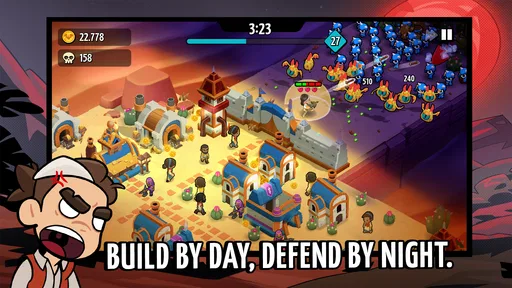
I spent time with Vampirio: Defend & Survive as a compact action game built around a simple pressure cycle: prepare your fortress while there is daylight, then deal with increasingly dangerous monster attacks after dark. That basic rhythm is easy to understand, but it creates more interesting decisions than the short store description suggests. Every daytime choice affects how comfortable the next night feels, and a careless investment can turn a promising run into a desperate scramble.
The game comes from Outfit7 Neo Limited and is free to download, with optional in-app purchases ranging from $0.49 to $99.99 per item. It is rated for Everyone, so the presentation is approachable rather than grim or graphic. I would describe it as a light roguelike action experience for players who enjoy short defensive runs, quick decisions, and the satisfaction of making a weak base gradually more capable.
How the fortress-and-monster loop feels in practice
The strongest part of the design is the contrast between day and night. Daytime gives me a planning window instead of throwing enemies at me immediately. I can think about what the fortress needs, decide which improvement matters most, and prepare for the next assault. Night removes that breathing room. The focus shifts from building a plan to executing it under pressure.
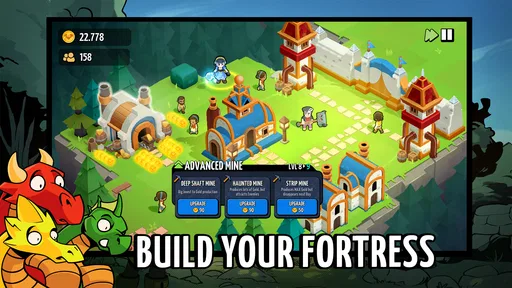
That structure makes each run feel like a small conversation between preparation and reaction. If I spend everything on one attractive improvement, I may leave another weakness exposed. If I play too cautiously, I may enter the next attack without enough strength to handle the threat. The game works best when I treat the fortress as a system rather than a single upgrade target.
For a mobile game, this is a useful format because it supports both a quick session and a longer chain of attempts. A short break can accommodate a limited run, while a more relaxed evening gives me room to experiment with different priorities. The action is not entirely mindless, yet the rules are readable enough that I do not need a long tutorial before understanding the central objective.
The roguelike element also changes how I judge failure. Losing a run is not simply a sign that the controls are poor or that the game is unfair. It can reveal that I prepared for the wrong kind of pressure, ignored a vulnerable part of the fortress, or committed too early to a strategy that needed more support. That said, this only remains satisfying when the game makes the consequences understandable. When a defeat feels connected to my choices, I want to try again; when it feels sudden and opaque, the restart loses its appeal.
Why the daytime phase deserves more attention
It is tempting to view the construction phase as a pause before the real game begins. I found that approach limiting. The best runs come from using daylight deliberately rather than rushing through it. I look at the fortress as a checklist of risks: what could fail first, what would become expensive to repair, and which improvement would help in more than one situation?
One practical habit is to avoid spending every available resource as soon as it appears. Keeping a small reserve gives me flexibility when the next attack exposes a problem. This is especially useful for new players, who may not yet recognize which choices are safe and which ones create a fragile build. A slightly less ambitious fortress that can adapt is often more valuable than a stronger-looking one with no room for correction.
Another useful approach is to change only one major priority at a time. If I improve several parts of the defense together, it becomes difficult to understand what actually helped. By concentrating on one decision, then watching how the following night plays out, I learn the game’s logic faster. That makes the roguelike loop feel less like random repetition and more like a series of small experiments.
This is also where the game separates itself from a straightforward action alternative. A conventional arcade-style title may reward constant movement and immediate reactions, while Vampirio adds a layer of preparation that affects the action before it begins. Players who want nothing but continuous combat may find the construction intervals slow. Players who enjoy weighing risk before a fight will probably appreciate them.
Night raids and the value of controlled reactions
Once night arrives, the game asks me to stop thinking like a builder and start thinking like a defender. The temptation is to react to the most visible danger, but that can make the fortress vulnerable elsewhere. I get better results when I keep the wider situation in mind and avoid spending all my attention on one immediate problem.
A helpful routine is to enter each night with a clear first response. I decide what I will protect if the opening attack becomes chaotic, then adapt only when the situation genuinely changes. This prevents the familiar mobile-game mistake of tapping or acting quickly without a plan. The game’s action feels more manageable when I use short, intentional decisions instead of trying to solve the entire raid at once.
The fortress itself gives the action a different emotional texture from a standard arena fight. I am not only trying to survive personally; I am trying to preserve the work invested during the day. That creates a stronger reason to care about small defensive mistakes. A night that looks almost successful can still feel costly if it leaves the next phase in a worse position.
On the other hand, players looking for deep character movement, a large competitive scene, or a story-heavy campaign may find the focus too narrow. The appeal lies in the repeating defense cycle, not in pretending to be a full replacement for a large action adventure. I would choose it for structured survival sessions, not for a sprawling world or a long narrative commitment.
What the current release says about the game’s direction
The current version is 1.5.10.25847, while the game was released on October 9, 2025. Those details matter because they place my experience in the context of an already updated product rather than an untouched launch build. The version number suggests an ongoing stage of development, but I would not treat that alone as proof of a particular feature roadmap. What matters to me is how stable and coherent the present loop feels.
In its current form, the game has a clear identity. It is not trying to hide the fact that its main attraction is the relationship between fortress preparation and monster survival. That clarity is valuable: I know what kind of session I am opening before I begin, and I can decide quickly whether I am in the mood for planning under pressure.
The game has also attracted a modest but visible audience, with over 100 thousand installs, an average rating of 4.5 from around 2.3 thousand ratings, and 125 reviews. I see those figures as encouraging rather than conclusive. They indicate that the core concept is connecting with players, but they do not remove the need to judge whether the loop matches my own preferences.
For someone already playing, the current version should be approached as a refinement point rather than a promise that every future update will transform the experience. I would pay attention to whether later changes deepen the strategic relationship between building and defending, improve clarity during raids, or simply add more short-term incentives. The first kind of change would strengthen the game’s identity; the second could make it feel busier without making it better.
How existing players can get more from a fresh run
Returning players may benefit from treating each attempt as a test of one question. For example, instead of trying to maximize everything, I might ask whether a more defensive daytime plan lets me survive a difficult night with fewer emergency decisions. Another run can test a more aggressive approach. This method keeps repetition useful because I am collecting practical knowledge, not merely hoping for a better outcome.
I also recommend paying attention to the condition of the fortress after a raid, not just whether the raid was survived. A narrow victory can create a poor starting point for the next cycle. If the game gives me a choice between immediate strength and long-term resilience, I prefer the option that keeps more routes open unless I am confident the next threat can be handled quickly.
New players should resist copying a single successful pattern too early. Roguelike systems are usually more interesting when they force adaptation, and a strategy that works in one run may fail when the surrounding circumstances change. The most useful early goal is not perfection; it is learning which decisions are reversible and which ones leave the fortress committed to a particular direction.
There is also a practical reason to play in a quiet setting. The day phase invites planning, while the night phase rewards attention. If I open the game while constantly switching between messages, I am more likely to make an avoidable defensive mistake and then blame the design for a decision I barely considered. It is a small game, but its best moments still depend on concentration.
Where the experience may frustrate
The main limitation is repetition. The day-night structure is the game’s strength, but it is also the source of its potential fatigue. If the available decisions do not continue to feel meaningful, repeated fortress preparation can become routine. Players who need constant novelty may prefer a broader action game with more environments, characters, or mission types.
The free entry point is convenient, but the presence of optional purchases means I would approach spending carefully. The listed purchase range extends from $0.49 to $99.99 per item, which is a wide gap. I would first establish whether the basic loop is enjoyable without buying anything, then decide whether a purchase genuinely improves my experience rather than simply shortening a challenge I have not yet learned.
That advice is especially important for younger players. The Everyone rating makes the game broadly accessible, but accessibility does not automatically mean that every purchase decision is sensible. If the device is shared with a child, I would set clear purchase controls before handing it over. The game is easier to enjoy when the focus stays on making better defensive choices instead of chasing every optional convenience.
Another possible weakness is that the concept may not satisfy players who want a relaxed idle defense game. Although the fortress-building idea sounds calm at first, the night raids add pressure and require active attention. Conversely, someone seeking nonstop action may dislike waiting for the planning phase. The right audience sits between those two extremes: players who enjoy action, but want their preparation to matter.
Who should install it and what I would watch next
I would recommend this game to anyone who likes compact survival challenges with a visible cause-and-effect relationship. It is a good fit for a player who wants to make a few decisions, see those decisions tested, and restart with a better understanding of what went wrong. It is also suitable for someone who enjoys action games but does not want every session to be based only on reflexes.
I would be less likely to recommend it to a player who wants a substantial story, competitive multiplayer, or a large collection of unrelated activities. The appeal is focused and cyclical. That focus can make the game easy to return to, but it also means there is less room for a player who expects a constantly changing adventure.
Compared with a typical tower-defense game, the fortress here feels more personal because the day phase and night phase are tied together inside the same run. Compared with a pure roguelike action game, the defensive preparation gives failure a longer shadow: what I did before the attack changes how the attack feels. Compared with an idle survival title, it asks for more active judgment. Those comparisons explain both its charm and its boundaries.
For everyday use, I can imagine opening it during a short commute or while waiting for an appointment, provided I am not in a situation where losing focus matters. I would begin a run when I have enough uninterrupted time to reach a meaningful decision point, rather than starting just to tap through the opening. The game is at its most satisfying when I can remember why I chose a particular improvement and then see the consequences during the raid.
Looking ahead, I would watch for updates that preserve the central tension instead of diluting it. Better explanations of defensive choices, more meaningful variation between runs, and improvements that make failure easier to learn from would all be valuable. I would be cautious about changes that rely mainly on bigger rewards or more purchase prompts, because those could distract from the thoughtful fortress-versus-raid relationship that gives the game its personality.
My final view is positive but measured. Vampirio is a focused action game with a clever preparation loop, an approachable presentation, and enough strategic friction to make repeated attempts worthwhile. It is not the right choice for every mobile player, especially anyone who dislikes repetition, optional purchases, or pauses between bursts of combat. For me, though, the combination of building by day and defending by night gives each decision a useful consequence. If you enjoy learning from failed runs and improving a fortress one choice at a time, this is a free game worth trying.
Verdict
Strengths of Vampirio: Defend & Survive
- Simple controls make the game easy to pick up on mobile.
- Short survival runs fit well into quick gaming sessions.
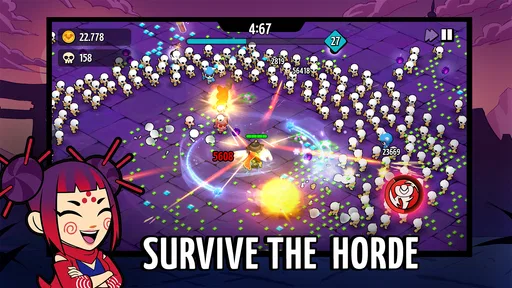
- Enemy waves create constant pressure and keep matches engaging.
- Upgrade choices add variety to each attempt.
- The dark vampire theme gives the game a distinctive atmosphere.
Limitations of Vampirio: Defend & Survive
- Runs can feel repetitive once familiar enemy patterns are learned.
- Progress may depend heavily on upgrading the right abilities early.
- The screen can become visually crowded during intense waves.
- Difficulty spikes may frustrate players seeking a more relaxed experience.
- Longer sessions may drain battery on older phones.
Similar Picks in This Category
View All
Temple Run 2: Endless Escape
Imangi Studios4.1

PUBG MOBILE
Level Infinite4.3

Free Fire: 9th Anniversary
GARENA INTERNATIONAL I4.4

Talking Tom: Hero Dash Run
Outfit7 Limited4.3

slither.io
Lowtech Studios3.9

Sniper 3D:Gun Shooting Games
Wildlife Studios4.6
Frequently Asked Questions
What is Vampirio: Defend & Survive?
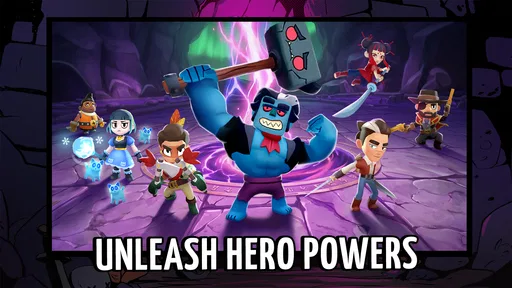
Vampirio: Defend & Survive is a fast-paced survival game in which you control a powerful vampire-like hero while facing continuous waves of enemies. The main objective is to stay alive, collect experience and useful items, unlock abilities, and improve your character during each run. Its simple controls make it easy to start, while the increasing difficulty keeps every session challenging.
How does the gameplay work in Vampirio: Defend & Survive?
The game is built around automatic attacks and movement-based survival. Instead of manually targeting every enemy, you generally focus on positioning your character, avoiding incoming attacks, collecting experience, and choosing upgrades as they become available. Each run gradually becomes more intense, so selecting complementary skills and learning how enemies move are important for surviving longer and reaching more difficult stages.
Can Vampirio: Defend & Survive be played offline?
Vampirio: Defend & Survive may support offline play for its main survival sessions, allowing you to enjoy the core gameplay without a constant internet connection. However, online access can still be required for advertisements, cloud features, updates, special events, or purchases. Availability may also depend on the version installed and the platform, so checking the store description is recommended before downloading.
Is Vampirio: Defend & Survive free to download and play?
The game is generally offered as a free download, but free-to-play access may include optional advertisements, in-app purchases, or systems that help accelerate progression. You can usually begin playing without paying, although some upgrades, resources, or convenience features may be available through purchases. Parents should review device payment settings if children will be playing the game.
What devices are compatible with Vampirio: Defend & Survive?
Compatibility depends on the operating system, device model, and the minimum requirements specified by the developer. Because the game includes numerous enemies, visual effects, and real-time action, older phones may experience slower performance, longer loading times, or reduced battery life. Before installing, make sure your Android or iOS device has enough free storage and is running a supported system version.
Play our best games!


